
The short version
- 60 influencer marketing terms in 6 groups: creators and audiences, campaign workflow, performance metrics, credibility and safety, competitive intelligence, and platform features.
- Every entry is a plain definition, with an Indian example where it helps. Bookmark it for the next report that assumes you know what CPE, EMV and Social Score mean.
- The 10 credibility and safety terms are the ones to check before any shortlist is locked.
A campaign report is on screen. It runs through CPE, CPV, EMV, sentiment, Social Score and audience overlap at speed, and the presenter assumes everyone is keeping up. Half the room is. The other half is writing down terms to look up later.
The searches that follow are hit and miss: some definitions outdated, some too generic, a few missing altogether. This influencer marketing glossary covers 60 terms, from the basics in every campaign report to the metrics that appear in platform dashboards and are rarely explained anywhere else. It is organised into 6 groups so you can jump to the one you need.

Creator and audience terms
How creators and their audiences get sized up and described.
Audience composition
The age, gender, location and language breakdown of a creator’s followers. It predicts campaign fit better than the creator’s own profile does.
Audience location
Where a creator’s followers live, as distinct from where the creator is based. A Mumbai creator can have most of their audience outside India, which matters if you only ship domestically.
Audience overlap
How much of the same audience 2 or more creators in a campaign already share. High overlap inflates the combined follower count without adding real reach. Checking it before the roster is final is one of the jobs of the Influencer Suite.
Creator
Anyone producing content for a social audience. In influencer marketing the word is used interchangeably with influencer, and it is the term most of the people you brief prefer.
Creator tier
The follower-count band a creator belongs to: nano, micro, macro or mega. It sets expectations for engagement rate, fee range and the kind of campaign the creator fits.
Engagement pod
A group of creators who agree to like and comment on each other’s posts as soon as they go up, to get an early push from the algorithm. The engagement is real but it is not coming from the creator’s wider audience.
Mass follower
An account that follows so many other accounts that its feed is too crowded for any single post to be noticed. Real accounts, but they add almost no engagement. Vetting tools count them separately from real followers.
Mega influencer
A creator with over 1 million followers, often a celebrity. Reach tops out here, engagement per follower is the lowest of any tier, and fees are the steepest.
Macro influencer
A creator with 100,000 to 1 million followers. The audience gets more mixed at this size and engagement rate usually softens as the following becomes less niche.
Micro influencer
A creator with 10,000 to 100,000 followers. Often the best balance of audience trust, engagement and fee for a mid-sized brand.
Nano influencer
A creator with 1,000 to 10,000 followers. Small, highly engaged audiences, often concentrated in one city or language, which makes them a strong fit for regional campaigns in Tier 2 and Tier 3 markets.
Campaign and workflow terms

How campaigns get briefed, tracked and delivered.
Approval workflow
The sequence a piece of content moves through before it goes live: script submitted, script approved, video submitted, video approved, live. Keeping it in one place stops 3 people sending a creator 3 different sets of feedback.
Barter collaboration
A partnership where the creator receives product instead of a fee. Common with nano and micro creators in India. Deliverables and usage rights still need to be written down.
Campaign brief
The document that tells a creator what the campaign needs: content type, key message, non-negotiables, go-live dates and brand guidelines, while leaving execution to the creator.
Dedicated video
A YouTube video built entirely around one brand’s product. It costs more than a mention because the brand gets the creator’s full attention for the whole video.
Deliverable
A specific piece of content a creator agrees to produce, defined by platform, format and quantity in the brief and confirmed in the contract. “2 Reels and 3 Stories” is a deliverable list.
Exclusivity clause
A contract term that stops a creator working with competing brands for a set period. Define the category, the timeline, the market and the scope, or it will be argued about later.
Go-live date
The agreed date content must be published. Set it per creator and per deliverable so the launch does not drift.
Integrated mention
A brand placement inside content with a broader topic, such as a 60-second sponsored segment inside a longer YouTube video.
Media plan
The plan for which creators get contacted, with what brief, on what timeline and with what budget split. Media planning tools calculate expected engagement, EMV and ROI before you commit.
Rate card
A creator’s published price list per deliverable type. Treat it as the opening position; rates in India vary widely by city, language and category.
Usage rights
What a brand can do with creator content after it goes live: paid amplification, whitelisting, website use, and for how long. Agree it before production starts.
Whitelisting
Running paid ads through a creator’s own account instead of the brand’s. The ad reads as coming from the creator, which usually outperforms the same creative from the brand handle.
Performance and analytics terms
How campaign results are measured and reported.
Attribution
Working out which creator or post caused a click, sign-up or sale. In influencer campaigns it usually relies on per-creator tracked links and discount codes.
Click-through rate (CTR)
Clicks divided by impressions, as a percentage. The measure of whether content made people act, not just watch.
Conversion rate
The share of people who took the action you wanted after clicking: a purchase, a sign-up, an app install.
Cost per engagement (CPE)
Total campaign spend divided by total engagements. The basic efficiency metric for a creator or a campaign.
CPE benchmark
A reference figure for what one engagement would cost through paid media. Your own past paid campaigns are a better benchmark than an industry average.
Cost per view (CPV)
Total spend divided by total views. Most useful for video-heavy campaigns on YouTube and Reels.
Earned media value (EMV)
An estimate of what a campaign’s engagement would have cost through paid ads: total engagements multiplied by a CPE benchmark. Good for understanding scale, not a measure of revenue. The EMV guide works through examples in rupees.
Engagement rate (ER)
Total engagement (likes, comments, saves, shares) divided by followers, multiplied by 100. Larger creators usually post lower rates than smaller ones.
Impressions
The total number of times content was shown, including repeat views by the same person. Higher than reach by definition.
Reach
The number of unique people who saw a piece of content.
Return on investment (ROI)
Revenue or value generated minus what you spent, divided by what you spent. The number leadership wants; EMV is often shown in its place, which is a mistake.
Share of voice
How much of the category conversation belongs to your brand compared with competitors, measured on engagement, content volume, reach or creator partnerships. The share of voice guide covers the calculation.
Unique reach
The combined audience of a multi-creator campaign after removing follower overlap. Always lower than the sum of follower counts.
Credibility and safety terms
How creator authenticity and brand safety are checked before a brief goes out.
Audience authenticity
How much of a creator’s audience is real, active people rather than bots or dormant accounts.
Audience credibility
A quick read of audience quality: real follower percentage, suspicious account rate, and how actively the audience engages.
Brand safety
Whether a creator’s content and past behaviour could embarrass the brand. Checked on content, comment sections and previous partnerships.
Content safety check
A review of a creator’s past content for sensitive keywords, competitor mentions or earlier controversies, run before shortlisting.
Disclosure
Labelling paid partnerships so the audience knows. In India, ASCI’s influencer guidelines require a clear label such as #ad or #sponsored, placed where it can be seen.
Growth consistency
Whether a creator’s follower growth has been steady or shows sudden spikes that suggest bought followers.
Morality clause
A contract clause that lets a brand end a partnership, and sometimes recover payment, if a creator’s behaviour goes against the brand’s values.
Real follower percentage
The share of a creator’s followers that appear genuine and active after removing mass followers and inactive accounts. It varies a lot even within the same tier.
Social Score
CultureX’s composite creator credibility score. It rolls several signals about engagement quality and audience into one number so creators can be compared on quality rather than follower count.
Suspicious account rate
The percentage of followers flagged as bots, spam or inactive. Check it before any shortlist decision; the vetting checklist explains what a bad number looks like.
Competitive and market intelligence terms
How brands track competitor activity and category position.
Category sentiment
The overall mood around a product category, tracked across several brands rather than one.
Comments radar
A view of the tone of comments on a competitor’s posts, grouped into positive, neutral and negative. Part of the Listening Suite.
Competitive benchmarking
Putting your brand’s social performance next to several competitors on the same metrics over the same window, so the trend shows rather than a single snapshot.
Competitive set
The 3 to 10 brands you measure yourself against: direct, aspirational and emerging. The competitor analysis guide explains how to pick them.
Content theme tracking
Grouping a competitor’s posts by theme to see which types are gaining frequency and which are fading.
Influencer map
A view of the creators a competitor has worked with recently. Used to spot conflicts before outreach and to find creators already proven in your category.
Share of creator pool
The share of a category’s actively working creators that a brand is partnering with, relative to competitors. A leading indicator of whether a program is growing or shrinking.
Social listening
Tracking public conversations about a brand, a category or a competitor across social platforms. Social intelligence vs social listening covers where it ends and analysis begins.
Platform and technology terms

Features that appear in platform dashboards and are rarely explained.
AI comment classification
Automatic sorting of comments into categories such as purchase intent, product feedback, service concerns and brand mentions, so the ones that need a reply surface first.
Deep analysis
A fuller profile report on a creator beyond the search view: Social Score, audience demographics, follower growth trend, brand affinity and median engagement rate.
Lookalike creators
A search that starts from one creator who worked and finds others with a similar audience and content profile.
Natural-language creator search
Typing a brief in plain words (“Tamil-speaking skincare creators in Chennai with 20K to 80K followers”) instead of setting filter boxes one by one.
Sentiment analysis
Reading captions and comments with natural language processing and scoring them positive, negative or neutral. The useful versions handle Hindi, Hinglish and English in the same comment.
White-label reporting
Client reports and dashboards that carry the agency’s own branding rather than the software vendor’s. Standard on agency plans.
How to use this glossary
Keep it open next to the next campaign report, so an unfamiliar metric sends you to the right section instead of a search engine. Use the platform and technology group when onboarding new hires or switching tools, since that vocabulary is rarely in product documentation.
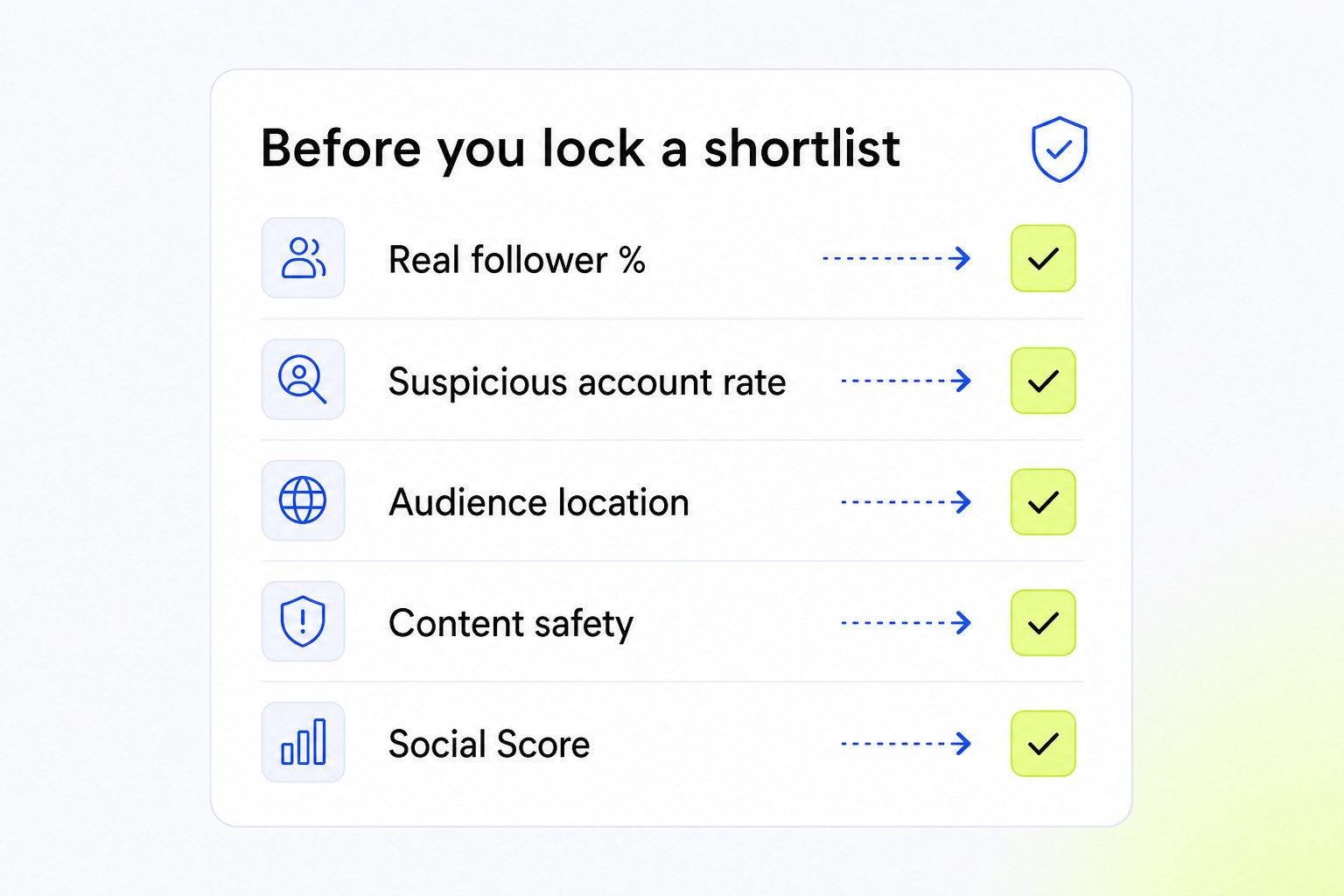
Before locking any shortlist, run the credibility and safety group as a checklist: real follower percentage, suspicious account rate, audience location, content safety and Social Score. Those 5 checks tell you whether a creator is worth briefing before you spend a rupee.
See CultureX in action
See CPE, EMV, sentiment and Social Score tracked per creator in one live dashboard.
Frequently asked questions
What are the most important influencer marketing terms to know?
Engagement rate, CPE, reach and creator tier appear in almost every campaign report. If you run campaigns regularly, add Social Score, audience overlap and sentiment analysis.
What does engagement rate mean in influencer marketing?
Total engagement on a post (likes, comments, saves, shares) divided by follower count, shown as a percentage. Read it alongside audience credibility rather than on its own.
What is the difference between CPE, CPV and EMV?
CPE is cost per engagement, CPV is cost per view, and EMV estimates what a campaign’s engagement would have cost through paid media. The first 2 measure efficiency; the third gives a read on scale.
What is audience overlap and why does it matter?
It is how much of the same audience several creators already reach. High overlap makes campaign reach look larger than it is, so check it before the final creator list is locked.