
The short version
- Social listening reads how your own audience reacts on your own channels, close to real time.
- Social intelligence looks outward: what competitors post, which creators they book, and where you rank against them.
- Most brands are missing one of the two. One question in your next team meeting tells you which.
Open a vendor pitch deck or a job listing for a social media strategist and you will find social listening and social intelligence in the same sentence, as if they were one job. They are not. One tells you how your own audience is reacting right now. The other tells you where you stand against everyone else selling in the same space.
The confusion is understandable. Both work with text, both measure sentiment, and both are usually sold together. That is where the similarity ends. Treat them as one thing and you will confidently answer the wrong question.
What social listening actually means
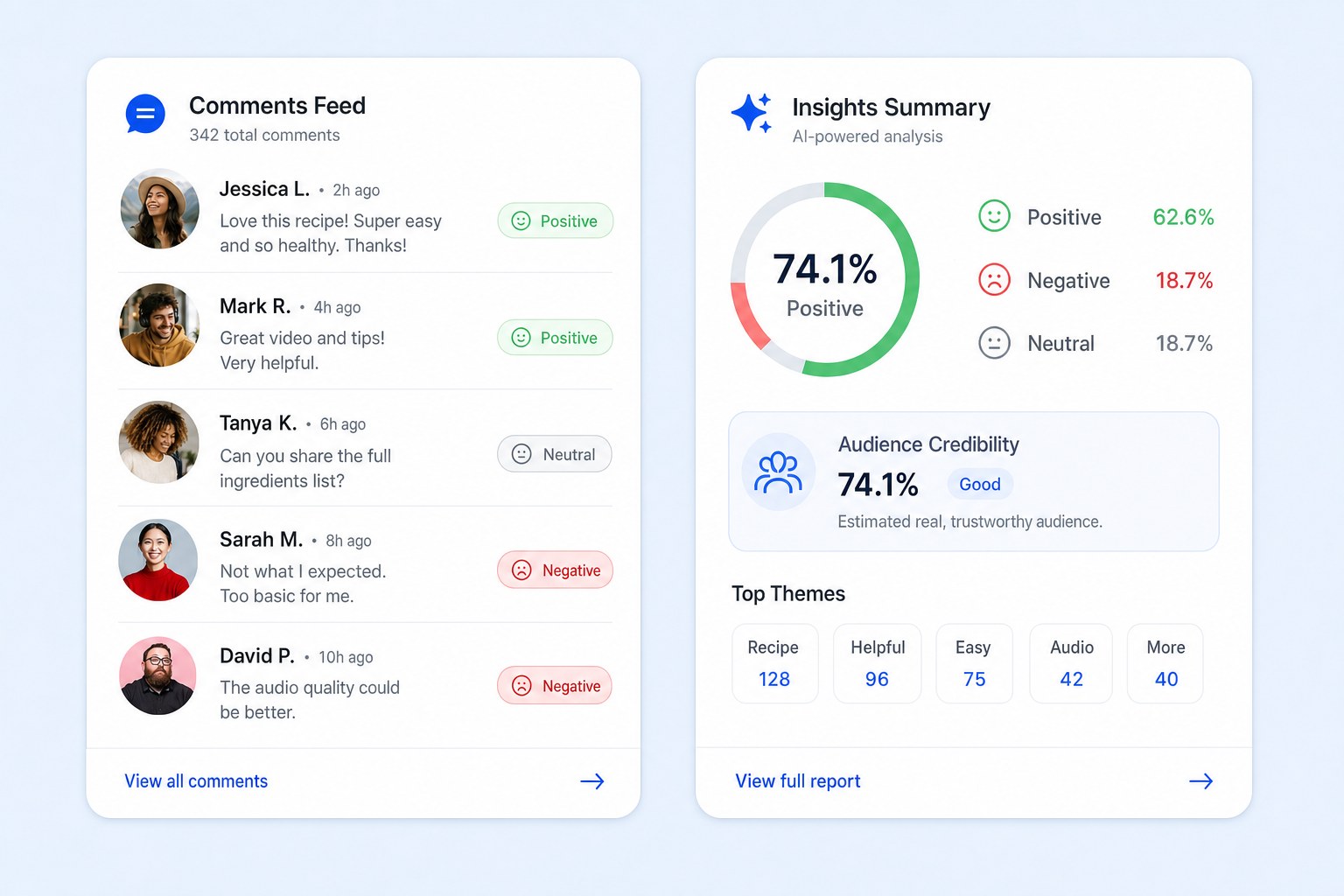
Social listening tracks and reads what people say about your content on your own channels, close to real time: sentiment on a post, reactions in the comments, and how people respond to whatever just went live.
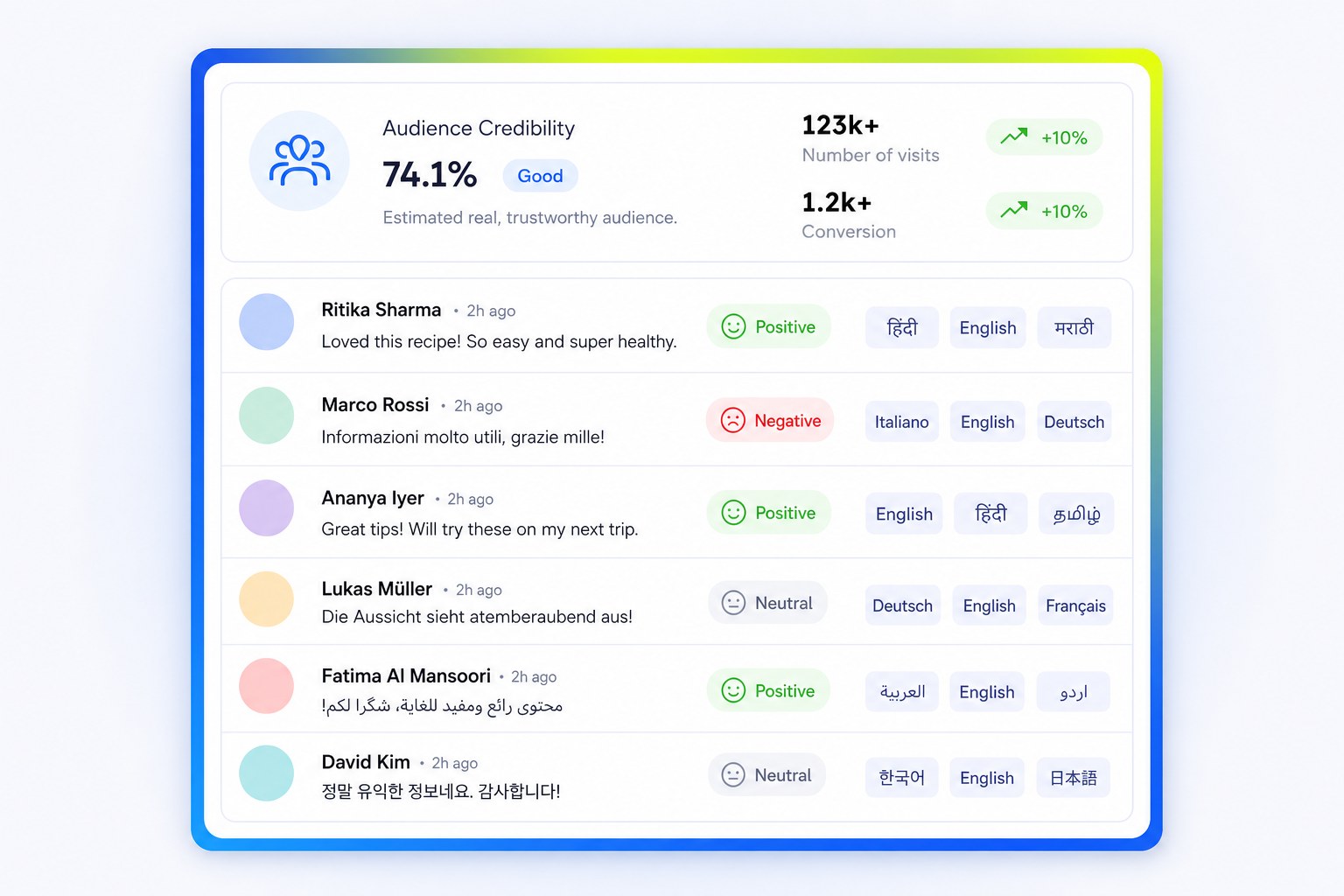
Picture it concretely. Every comment on your brand’s Instagram post gets read and tagged positive, negative or neutral, or sorted by type: purchase intent, product feedback, a service complaint. Nobody scrolls through 800 comments to get a feel for the mood. Do this for a few months and patterns show up that a single scroll would never reveal: a product claim that keeps drawing pushback, or a format that consistently gets a warmer reaction than everything else you post.
For an Indian brand there is one more wrinkle. Comment sections switch between Hindi, Hinglish and English mid-thread, sometimes inside one comment. The comments radar in the tracking suite reads all three, which is the difference between a sentiment number you can trust and one that only counted the English replies. Supertails used live monitoring of its own channels this way and lifted brand engagement 60%.
That is listening. It tells you how your own audience is responding. It says nothing about how that response compares to anyone else’s, and it was never built to. A brand relying only on listening can feel confident about a campaign right up until someone asks how it stacked up against the competition. Then there is no data to answer with.
What social intelligence actually means
Social intelligence tells you where you stand in the market. It shows what competitors are doing, which content trends are building, and how your performance compares with the 2 or 3 brands you actually compete with, rather than with your own past campaigns.
It answers questions listening cannot. Which creators has a competitor worked with in the last month? Are you gaining or losing ground on engagement against the 2 companies you compete with directly? Has a competitor started posting far more of one content format than it did 3 months ago? Each of these is a comparison, and a comparison needs data from outside your own accounts. The competitor analysis guide walks through how to set that up.
That is intelligence. It tells you where you stand relative to the field. It does not tell you what is happening in your own comment section today, and that gap is exactly where listening picks up.
Social listening vs social intelligence: why you need both
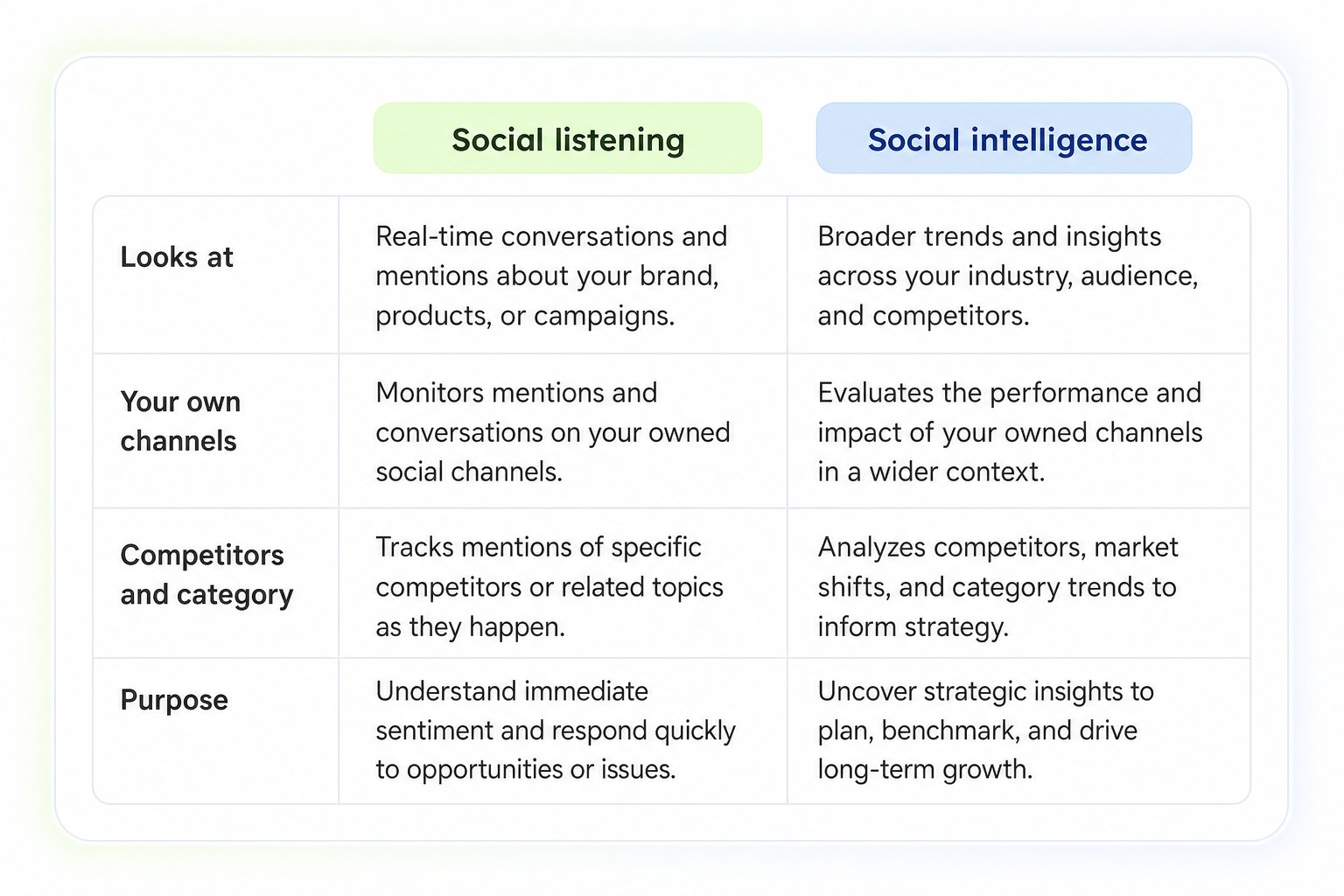
| Social listening | Social intelligence | |
|---|---|---|
| Looks at | Your own channels | Competitors and the category |
| Answers | How did our audience react? | How do we compare? |
| Speed | Close to real time | Trends over weeks and months |
| Typical output | Sentiment, comment categories, best-performing formats | Benchmarks, competitor creator lists, content themes |
| Blind spot | No context against the field | No early warning from your own audience |
Listening without intelligence means you can say whether your own audience liked a launch, but you have no way to know if that reaction was strong or weak next to what competitors pulled off in the same window. A campaign that looks like a win on its own can be a middling result once you see what the rest of the category managed that month. Your own numbers, read in isolation, will always look better than they do next to someone else’s.
Intelligence without listening has the opposite problem. You can know exactly which creators a rival booked last week and still have zero warning that your own comment section turned on something you posted 2 days ago. All the category context in the world does not help while your own audience is quietly going cold and nobody is watching that side.
These two are not substitutes. Miss one and you are missing half the picture, and which half depends on which one you skipped.
What this looks like in one platform
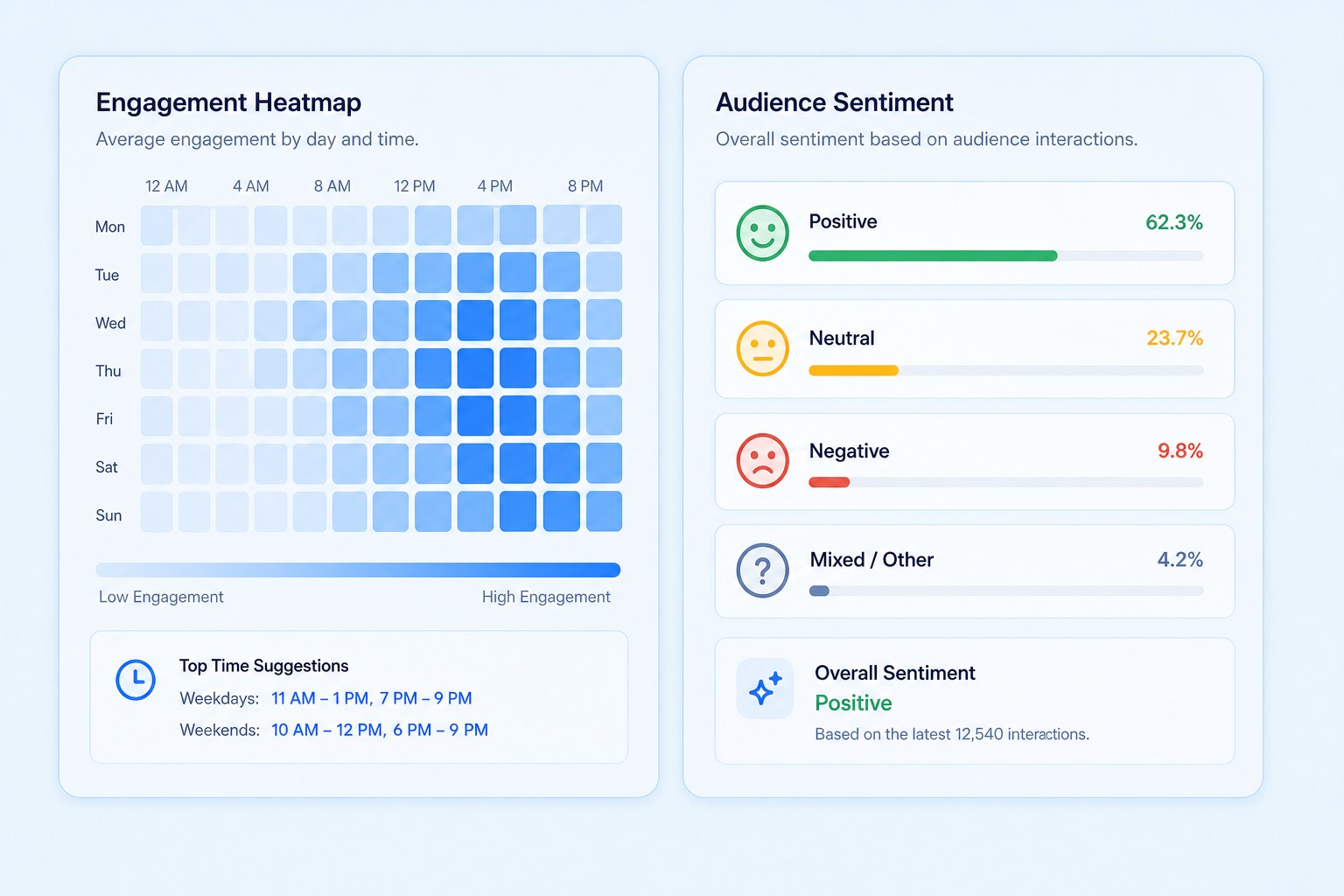
On CultureX the two jobs sit in two suites, which is a fair reflection of how different they are. The tracking suite handles listening: your own Instagram and YouTube accounts, sentiment on every post and comment, comment classification into categories like purchase intent and product feedback, and a performance heatmap built from your own posting history.
The listening suite handles intelligence: competitor analysis that benchmarks your engagement rate and Social Score against a named set of rivals, an influencer map of the creators they have booked recently, and content and comment tracking across their feeds so a shift in what they post shows up early.
One caution on benchmarks. Engagement rate and Social Score vary widely from category to category, so a comparison only means something against your own defined competitive set. A generic industry average tells you almost nothing about a regional FMCG brand or a D2C skincare label.
One question to find out which side you are missing
If your team can answer “how did our last post do compared to our previous posts” but not “how did it do compared to what our 2 closest competitors posted that week”, you have a gap in intelligence.
If you can list every creator your competitors booked this quarter but cannot say how your own audience responded to your last launch, the gap is listening.
Most brands assume they have one problem when they have the other. Ask both questions in your next team meeting and see which one gets the pause. Fixing the missing half is a faster job than rebuilding your whole measurement stack. Once you know which side you are on, the 15 ways to use social listening and social media market research posts cover what to do with each.
See CultureX in action
See your own comment sections and your competitors’ feeds side by side, without switching tools.
Frequently asked questions
What is the difference between social listening and social intelligence?
Social listening reads how your own audience responds on your own channels, through sentiment, comments and engagement, close to real time. Social intelligence looks outward at where you stand against competitors, including their creator partnerships and content trends across the category. Same underlying technique, pointed at a different question.
Is social listening the same as social media monitoring?
The two terms are often used interchangeably, and both generally mean tracking activity and sentiment on your own channels. Social intelligence is the separate discipline that adds the competitive and category-wide view neither of them provides on its own.
Does a brand need both social listening and social intelligence?
Yes. Listening without intelligence means never knowing whether a strong-looking result is strong for the category. Intelligence without listening means missing an early warning building in your own comment section while all the attention points outward. They cover two different blind spots.
What is an example of social intelligence in practice?
Comparing your engagement rate and Social Score against 2 or 3 named competitors over the same window, or noticing that a competitor has moved to a new content format faster than the rest of the category. Both are outward-facing questions that listening tools were never built to answer.
Can one tool handle both social listening and social intelligence?
Some platforms bundle both, which is part of why the terms blur together. What matters is whether both jobs are actually done, own-channel monitoring and competitive benchmarking, rather than one being quietly skipped because it is assumed the other covers it. CultureX runs them as two suites in one platform.