The short version
- Most creator problems were visible before the brief went out. Vetting during discovery, not after the campaign, is what catches them.
- Run 5 checks on every creator: niche fit, real followers and suspicious accounts, audience demographics, engagement quality with Social Score, and content safety.
- A creator can fail one check and still be right for the campaign. The section near the end tells you when.
The post-campaign report came back lower than projected. Someone pulled the creator’s audience data to find out why. 24% of her followers were flagged as suspicious accounts. The engagement rate had looked fine. The content looked right. Nobody had run a follower quality check.
The campaign did not fail because the creator was dishonest or the brief was bad. The brand paid for 90,000 followers and reached far fewer real people. That was knowable 6 weeks earlier.
That is what influencer vetting is for. Everything that follows a shortlisting decision, the brief, the content, the report, is only as solid as the data the decision was made on. This post is the full checklist. It covers one stage of hiring; the rest of the process, from defining the campaign to tracking results per creator, is in how to hire influencers.
Why vetting belongs in discovery, not after the campaign
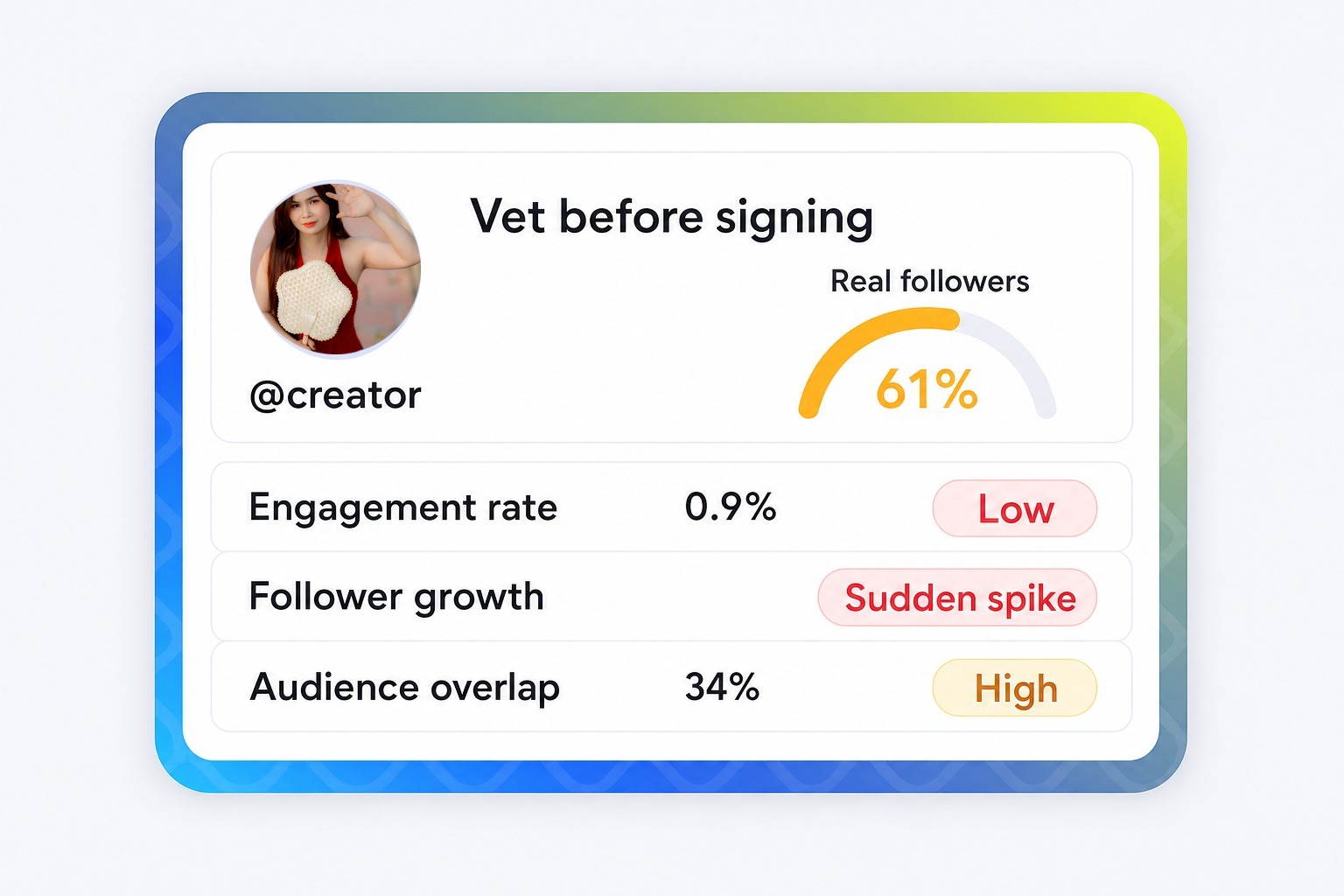
The uncomfortable part is that most problems brands find after a campaign were there from the start. Fake followers do not appear later. Audience geography does not change between shortlisting and launch. Content safety issues are rarely new. The warning signs were visible. Nobody looked at the right time.
Timing is what goes wrong. Teams build a shortlist, pick favourites, and only then look at the data. By that point vetting no longer informs the decision. It threatens one the team has already made, so it gets rushed or skipped.
The 5 checks below work best while the team is still deciding who belongs on the list. If the data is in the search results, each check takes minutes. That is far cheaper than explaining a campaign that reached the wrong 64,000 people.
Check 1: niche and content relevance

It sounds obvious. It catches more misses than people expect.
You are checking whether the creator concentrates on your category or only mentions it. A creator with “skincare” in the bio who posts skincare twice a month between travel, fitness and fashion is not a skincare creator for your purposes, whatever the bio says.
Pass: the last 20 to 30 posts show real depth in the category, tutorials, reviews, comparisons, and the audience followed this person for that focus.
Red flag: scattered content with no primary category, or a recent shift away from your niche. The shift matters more than it looks. People who followed for travel content will not respond to a skincare recommendation the way a skincare audience does.
With 400M+ profiles to search, this check depends on filters. CultureX’s influencer discovery filters by 100+ niches and lets you type the brief in plain language, so the results already match the category before you open a single profile.
Check 2: real followers and suspicious accounts
This is the check most brands skip and the one that costs the most.
You are looking at what share of the following is genuine, active people versus bots, spam profiles, inactive accounts and impersonators. Follower composition breaks down into real users, suspicious accounts, mass followers (real people who follow thousands of accounts and see almost nothing) and other influencers.
Pass: a healthy share of real followers and a low suspicious rate for the follower tier. The numbers vary a lot between creators with similar follower counts, so size alone tells you nothing.
Red flag: a good engagement rate on paper with a high suspicious share underneath. A creator with 80,000 followers and 20% suspicious accounts reaches about 64,000 real people, but you are pricing and judging against 80,000.
Every profile in the Influencer Suite search shows an authenticity score and fake follower percentage up front, so the difference is visible before a name reaches the shortlist.
Check 3: audience demographics versus the target buyer
Niche and follower quality can both pass and still leave one gap: whether the people watching match the people you sell to.
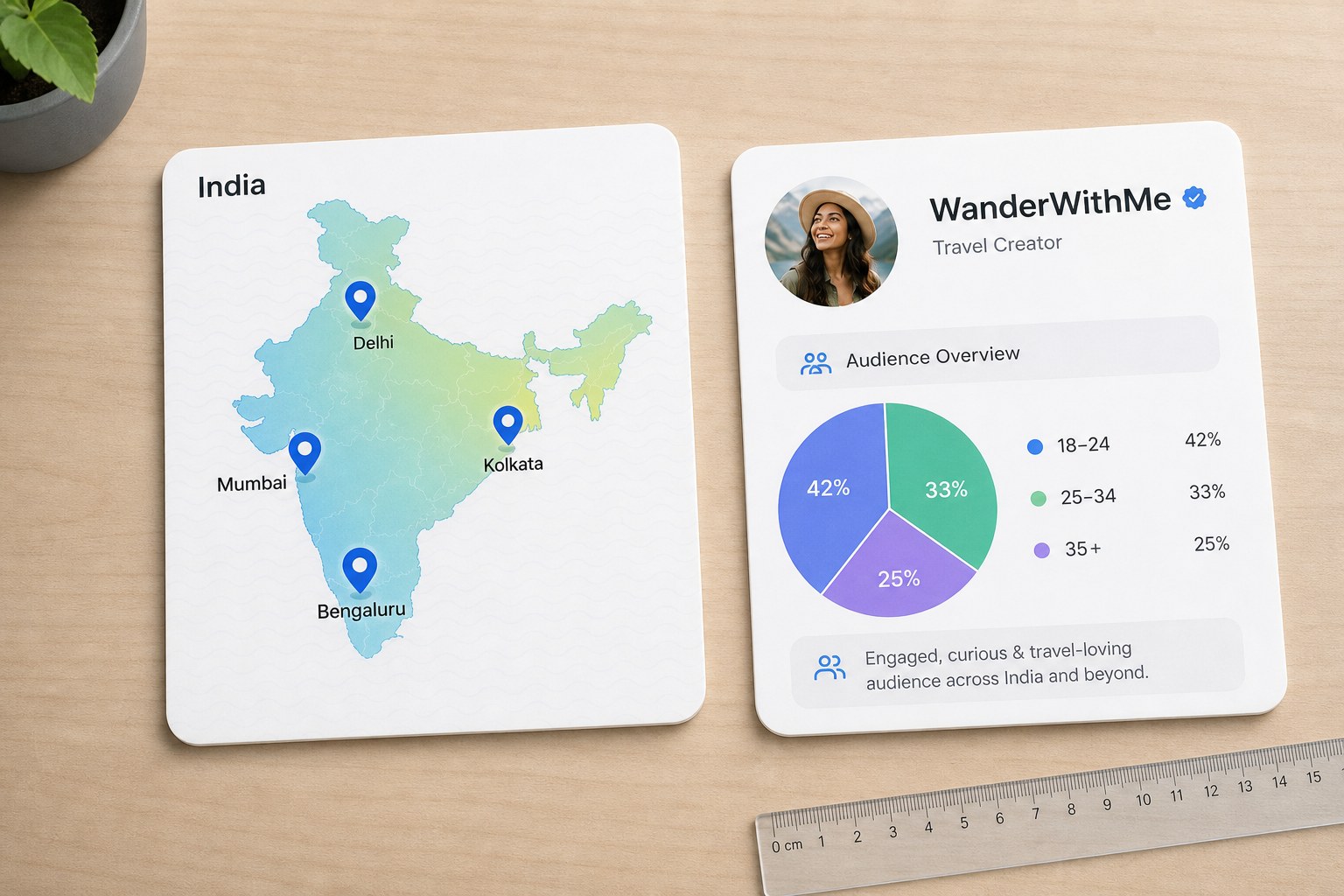
Check audience age split, gender split and location. Location means where the followers are, not where the creator lives.
Pass: an audience make-up that maps closely to the target buyer profile, read from audience data rather than inferred from the creator.
Red flag: a creator who looks right and an audience that is not. A female creator in a women’s category can have a largely male following. A creator based in Mumbai can have most of her audience outside India. A Hindi-language creator can have an audience concentrated in 2 states you do not serve yet.
This is why discovery should filter by audience location, age and gender at the search stage, not by the creator’s own profile. Soch Apparels chose creators on where their audiences actually were, across Delhi, Mumbai, Kolkata and Bengaluru, and lifted regional engagement by 45%.
Check 4: engagement quality, with Social Score next to raw ER
The same engagement rate does not mean the same creator. ER counts every interaction equally, and a save from a genuine buyer is worth far more than a like from an inactive account.
Read ER together with Social Score, a combined rating that weighs the quality of the engagement and the audience behind it rather than the raw count. The definitions of both are in our influencer marketing glossary.
Pass: ER in the expected range for the follower tier, a healthy Social Score, and solid save and share rates.
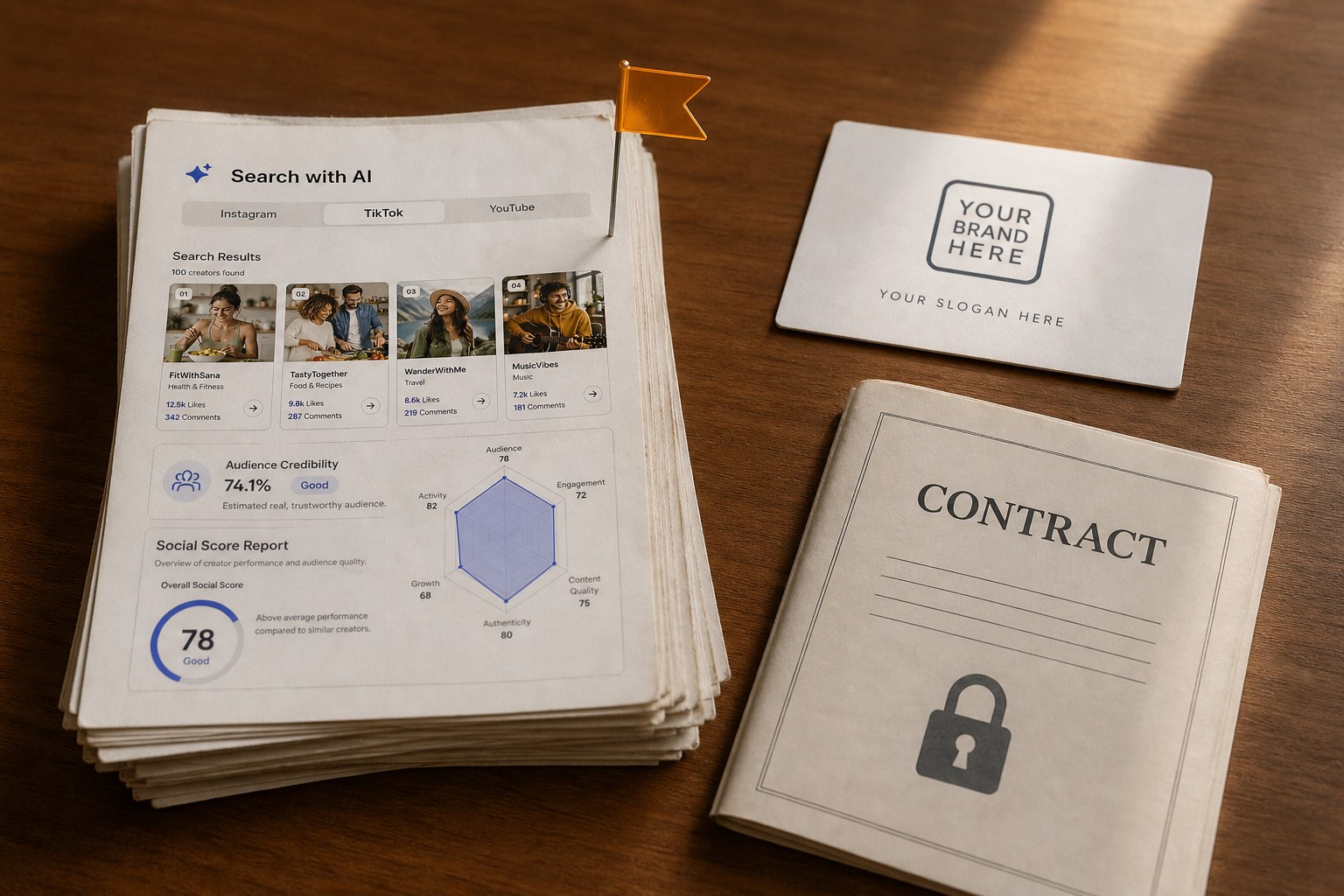
Red flag: unusually high ER, generic one-word comments from suspicious accounts, or a follower spike with no obvious cause. Social Score appears next to ER in every CultureX search result, which makes “is this engagement worth anything?” a glance rather than an audit.
Check 5: content safety and brand risk
This check protects the brand from associations it did not choose.
You are looking at whether the creator’s history contains anything that would be a problem with your logo next to it. Competitor brand mentions, unsupported health or medical claims, divisive political content, or past controversies that drew a strong negative response.
Pass: a clean history, a tone that has stayed broadly on-brand, and no obvious links to competitor promotions or sensitive topics.
Red flag: any of the above, read in context. A post from 4 years ago is not a post from last month. One isolated mention is not an ongoing pattern. Timing, frequency and audience reaction all count.
Do this before shortlisting. A morality clause in the contract gives legal cover, but it cannot undo content that is already published. Reviewing 100 creators’ histories by hand is not realistic, which is why content safety analysis in CultureX flags sensitive keywords in a creator’s past posts during discovery.
When a creator fails one check and passes the rest
Not every red flag is a rejection. Some cases need a closer look.
Suspicious rate slightly above average
Read it with the rest of the picture. If the real follower share is still high, the demographics fit, Social Score is healthy and the content is clean, a slightly elevated rate can be normal wear on a large account. The growth curve usually settles it. Gradual growth is fine. A sudden jump that did not continue is not.
Audience partly outside the target market
It depends on how much. 65% of followers in the target region is a very different creator from 35%. A partial mismatch can still work for awareness. It is hard to justify for a conversion campaign.
One weak Social Score component, strong overall
One weak signal does not rule a creator out. Low posting frequency can mean a creator who posts less and gets a strong response when she does.
A content flag on old posts
Look at timing and context. An old issue that was addressed and never resurfaced is different from a recent one that is still live.
The influencer vetting checklist
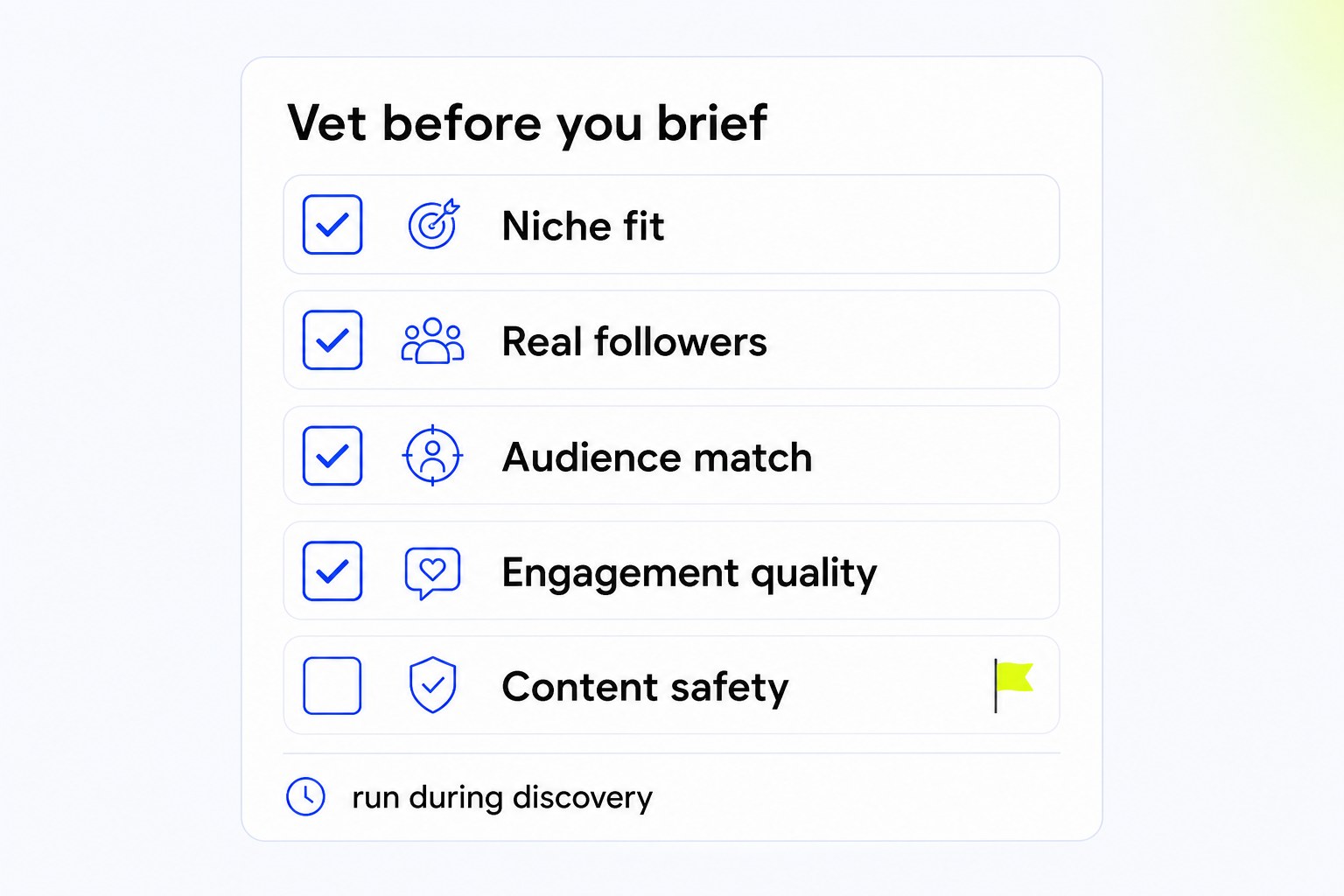
Run this on every creator during discovery, before anyone is contacted.
- Niche fit: the last 20 to 30 posts concentrate on the category.
- Audience credibility: real follower share is healthy and the suspicious rate is low for the tier.
- Demographics: audience age, gender and location match the target buyer, read from audience data.
- Engagement quality: ER is in range and Social Score is healthy, with real saves and shares.
- Content safety: no competitor promotions, unsupported claims or unresolved controversies in the history.
When all 5 sit in the search result, vetting stops being a separate project. ToggleHead vetted 36,462 creators on CultureX, lifted ROI by 40% and sped up execution by 45%. If you are building your first shortlist, our beginner’s guide to Instagram influencer marketing starts from zero.
See CultureX in action
Bring a creator from your shortlist to a 30-minute demo and we will run all 5 checks on the call.
Frequently asked questions
What is influencer vetting?
Checking a creator against a set of credibility and safety criteria before committing budget: follower quality, audience demographics, engagement authenticity and content history. It catches problems during discovery rather than after a campaign underperforms.
How do I check if an influencer has fake followers?
Do not judge from engagement rate alone. Look at the share of real followers and the percentage of suspicious accounts in the audience. Those numbers vary widely between creators with similar follower counts in the same niche. CultureX shows both on every profile during discovery.
What is Social Score?
A combined rating that looks past raw likes and comments at the quality of the engagement and the audience behind it. It helps you tell whether a creator’s engagement comes from genuine interest or from bots, pods and low-value interactions. CultureX shows it next to ER in search results.
How do I check an influencer’s audience demographics before signing?
Filter by audience location, age split and gender split, not by the creator’s own profile. A creator in your target city can have most of her audience elsewhere. Audience-level filters at the search stage change who makes the shortlist.
What is influencer content safety and why does it matter?
A review of the creator’s past posts for anything that could become a brand association problem: competitor mentions, unsupported health claims, divisive content or past controversies. A contract clause cannot undo content that is already live, so the check has to happen before the brief goes out.