
The short version
- Social listening earns its keep when it changes a decision: a brief, a shortlist, a reply, a product fix. Here are 15 decisions it can change.
- The examples run from a hair-oil brand in Chennai to a Diwali delivery problem, because Indian comment sections, in Hindi, Hinglish and English, are where the signals live.
- Set it up to run in the background, so the data is there when the brief is written and not only in the wrap report.
A D2C skincare brand in Bengaluru launches a new face wash in August. The campaign underperforms. In the debrief someone mentions that since June, comment sections across the category had been full of questions about one ingredient. The conversation was public, growing, and happening on the same feeds the brand was advertising on. The brief never mentioned it.
That is the gap social listening closes. It goes well beyond counting mentions. It means knowing what the category, your competitors and your own customers are saying while there is still time to act. Below are 15 ways to use it, each with the decision it changes and an example of how it plays out for a brand selling in India.
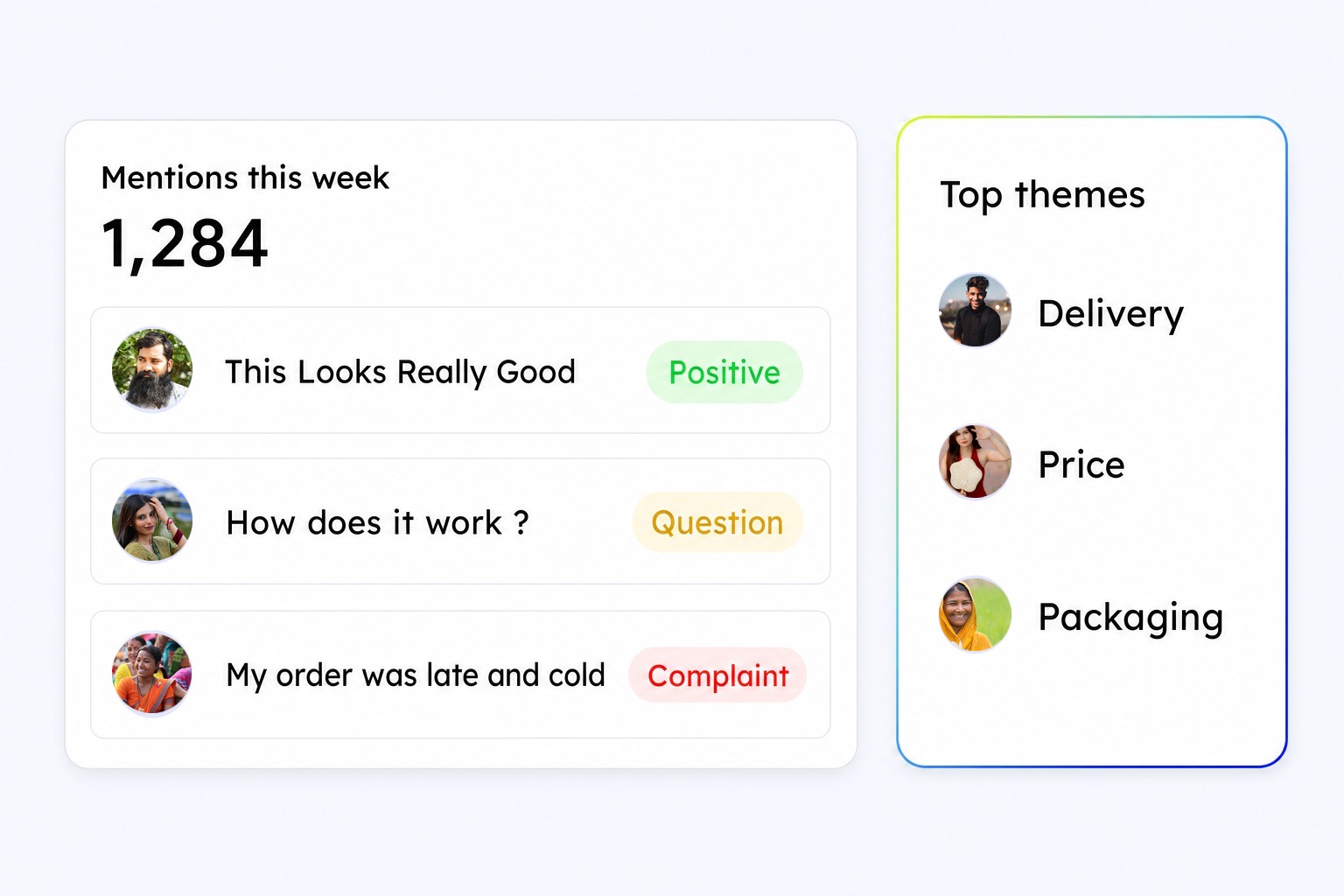
Before you plan: hear what the market is saying
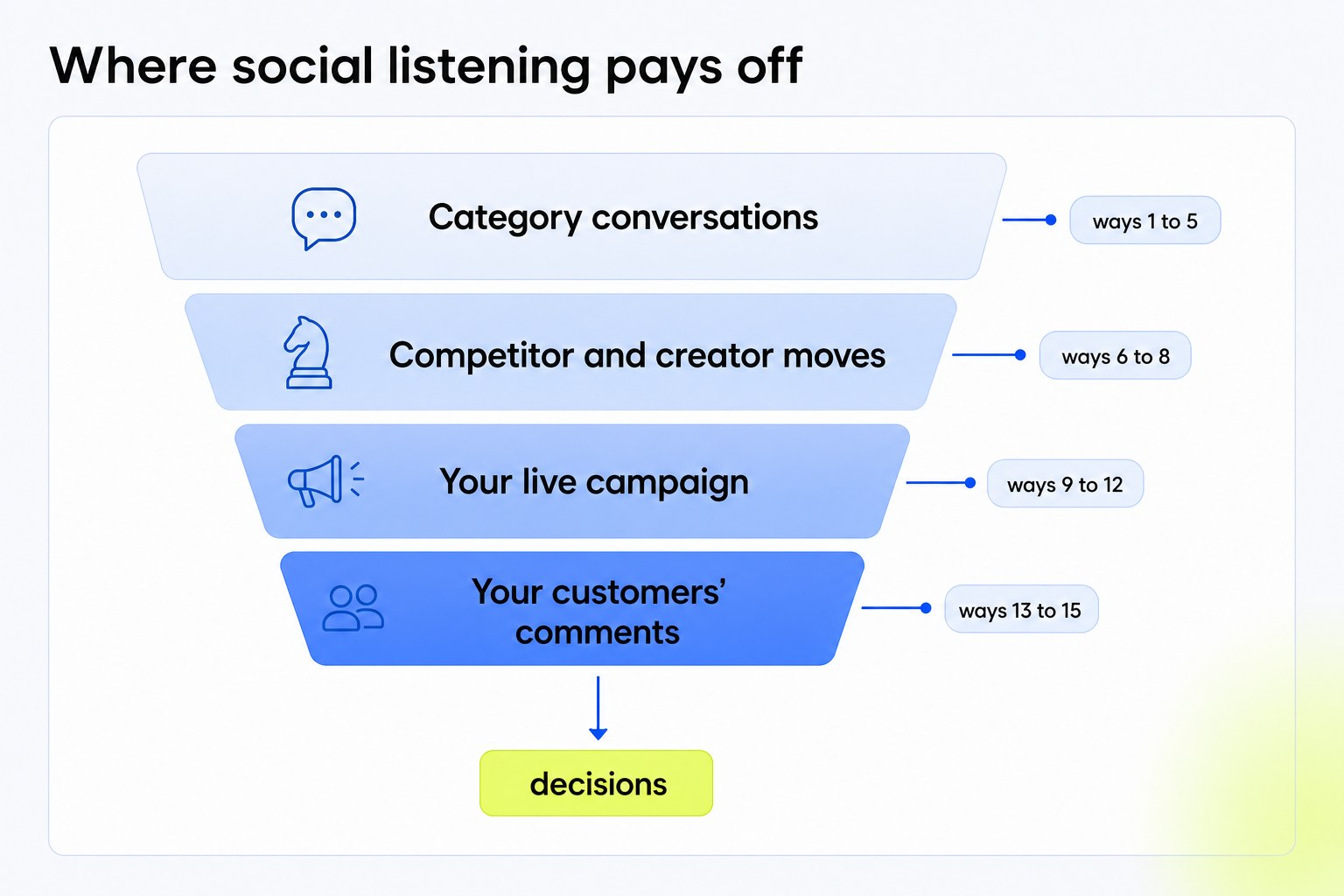
5 uses that belong in the research phase, before a brief is written.
1. Catch a category concern before it reaches your brand
When a competitor’s product draws a wave of comments about a category-level issue, an ingredient, a safety question, a price hike, the same issue travels across the category within weeks. A hair-oil brand that sees “does this work with hard water?” piling up under a rival’s posts from Chennai and Hyderabad can answer it in its own next campaign before customers ask. The decision it changes: what the brief must address, and not only what it wants to say.
2. Learn the questions people ask before they buy
Comments under product posts are full of pre-purchase questions. “COD available?” “Does it ship to Guwahati?” “Is the XL true to size?” A Surat ethnic-wear label that reads 200 of these in an afternoon knows which objections its product page and creator scripts must answer. Purchase-intent comments are also the cheapest sales leads you will ever get, provided someone is assigned to reply.
3. Spot a regional trend before it peaks
Trends surface in creator content and comments long before they appear in an industry report. A snack brand that notices Hinglish comments about a particular chilli flavour spreading through Indore and Jaipur food creators has weeks of head start on a regional variant. Listening that reads Hindi, Hinglish and English in the same comment is what makes this possible, because the earliest signals are rarely in English.
4. See which bets competitors are making
A competitor doubling its tutorial content, or quietly pulling back from creator partnerships, is telling you what its data says. Reading those moves, and the audience reaction to them, is better input than guessing. The step-by-step method is in our guide to social media competitor analysis for influencer campaigns, so it is not repeated here.
5. Know your share of the conversation
Your engagement rate rose 15% this quarter. Good, unless 2 rivals rose 35%. Tracking how much of the category conversation belongs to you, and whether it is growing, tells you if the campaign moved you or the whole market moved. Share of voice in influencer marketing explains how to measure it.
While you choose creators: check them against the conversation
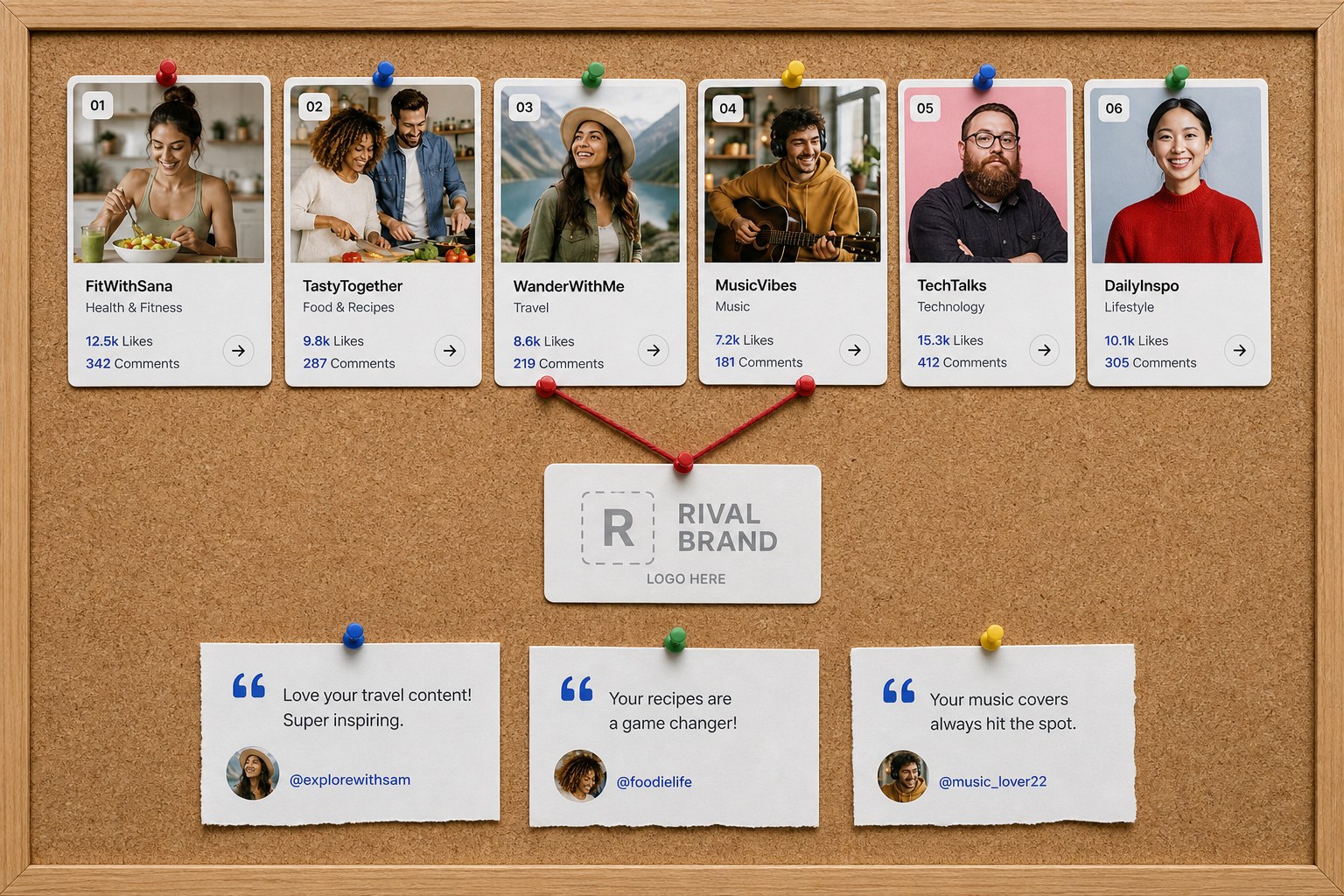
6. Check whether a creator is already working with a competitor
Before a shortlist is final, check whether any name on it is mid-campaign for a direct rival. A fitness creator who posted a competitor’s protein powder last week is a conflict and a signal at once: the category’s creator money is moving there. An influencer map of who competitors have worked with recently turns this from an awkward discovery after outreach into a 5-minute check before it.
7. Find the creators your category audience already trusts
Audiences name creators in comments without being asked. “Saw this on Priya’s page first.” “Is this the one Rahul reviewed?” A kitchen-appliance brand that collects those names across 3 months of category comments has a shortlist built by its own buyers rather than by follower counts. Vet them properly before any brief goes out, but start the list here.
8. Read the comments under a creator’s past sponsored posts
A creator’s engagement rate says how many people responded. The comments say how. “Another paid post” under every collaboration is a warning. “Ordered, link please” is what you are paying for. A Kolkata home-decor brand that reads the sentiment under a creator’s last 5 branded posts knows whether the audience trusts her recommendations before signing anything.
While the campaign runs: act while it still matters
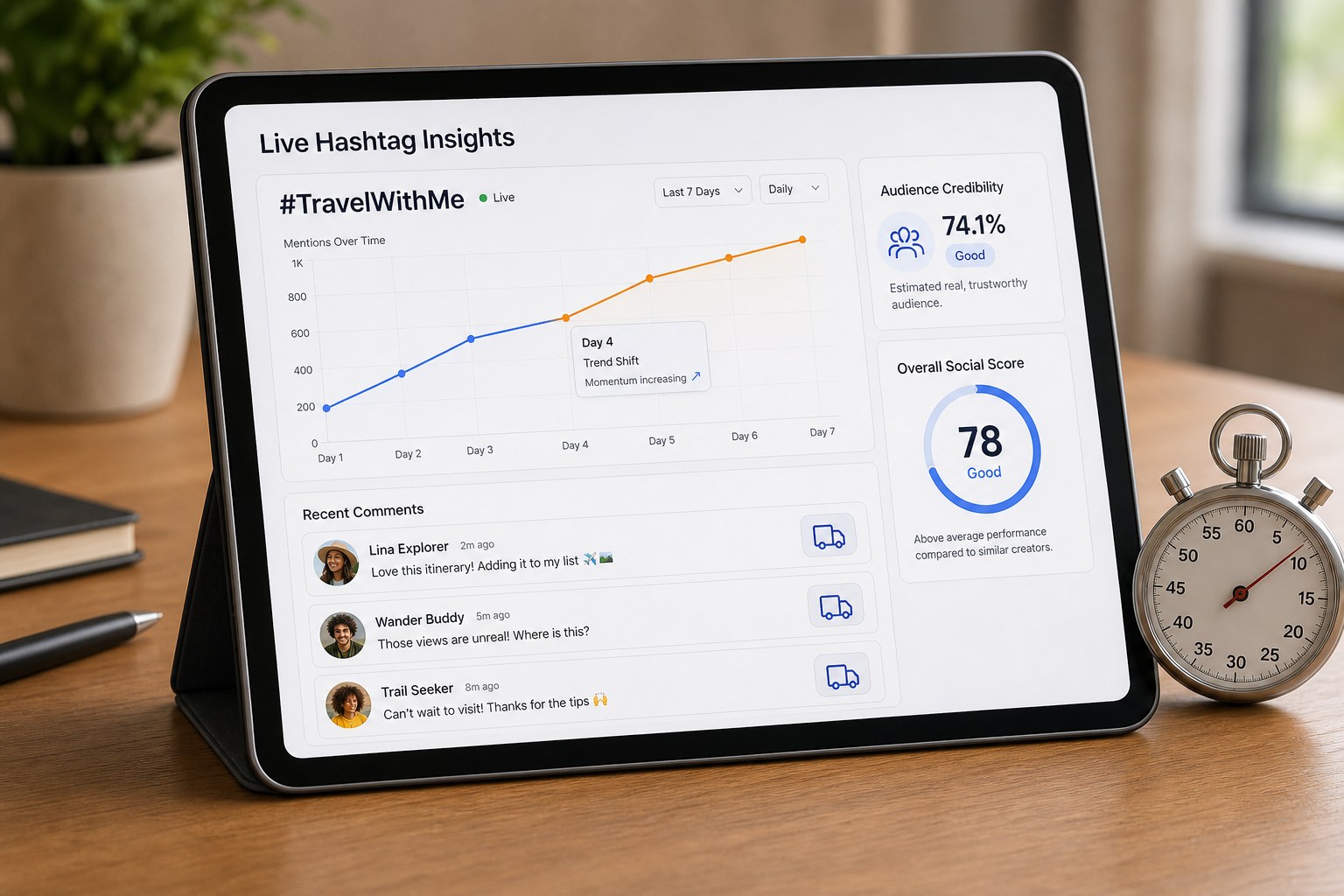
9. Read campaign hashtag sentiment while the campaign is live
Volume tells you a hashtag is being used. Sentiment tells you how it is going. A two-wheeler brand running a monsoon-ride campaign that sees the tone turn from excitement to complaints about a dealer’s delivery delay by day 4 can fix the dealer and brief creators to respond. Finding out in the wrap report means the conversation ended without you.
10. Route comments to the team that can act on them
High-volume comment sections mix purchase questions, product feedback, service complaints and general noise. Automatic comment classification sorts them into purchase intent, product feedback, service-related concerns and brand mentions. Sales gets the “where do I buy this” comments, support gets the “my order is late” ones, product gets the “the lid does not fit” ones, and nobody reads 4,000 comments to find the 40 that matter.
11. Catch a service failure before it becomes a story
During a Diwali sale, a Delhi electronics retailer starts seeing “still not delivered” comments across 3 creators’ posts within the same afternoon. Seen together, that is a warehouse problem, not 3 unlucky customers. Caught on day 1, it is a customer-service push. Caught on day 5, it is a screenshot thread doing the rounds. Supertails lifted brand engagement by 60% once comments were monitored live instead of reviewed weekly.
12. See which creator started the conversation
Hashtag totals say how much conversation a campaign produced. They do not say who produced it. In a 12-creator campaign, if one creator’s post triggered the spike, that is the creator to pay for boosting and to rebook. Matching comment and hashtag activity against each creator’s go-live time, together with per-creator tracked links, gives you conversation and conversion per creator.
After the campaign, and every week after that
13. Feed the product team real feedback
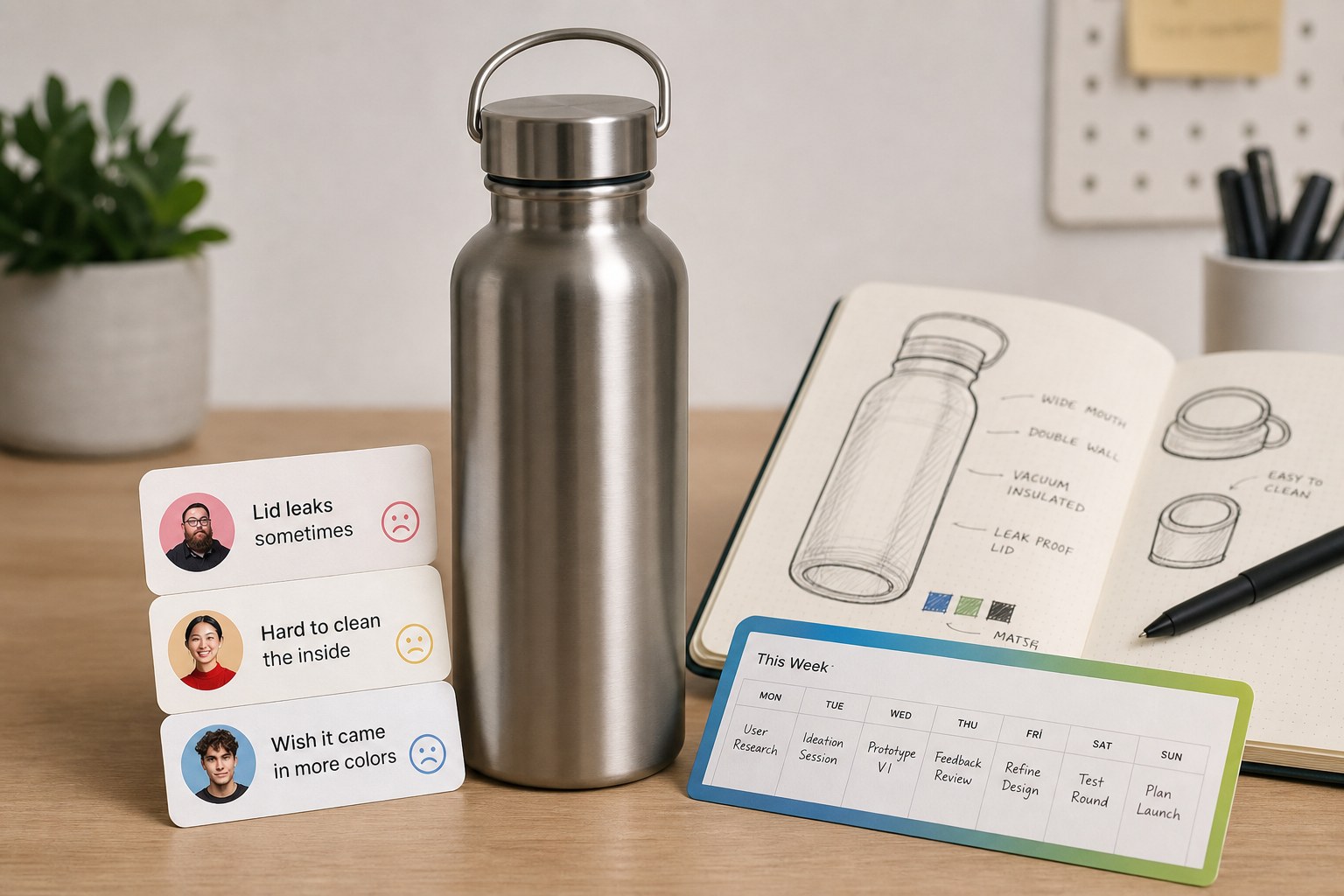
Comment sections are the largest unpaid focus group a brand has. A water-bottle brand hears the same 3 complaints across 6 months of comments: the cap leaks in a bag, the 1-litre size does not fit a car holder, the colour fades. None of this is a marketing problem. All of it belongs in the next product review, and listening is how it gets there without someone copying comments into a spreadsheet.
14. Pick posting windows from your own audience
Generic “best time to post” advice is an average of millions of accounts. Your own comment and reach history shows when your audience actually shows up, and the answer differs between a Mumbai office crowd and a Tier 2 family audience that scrolls after 9 PM. How to read that pattern is covered in when to post on Instagram.
15. Keep a live picture of how you are perceived versus competitors
Perception moves every week across comments, creator content and hashtags. A once-a-year brand tracker cannot keep up with a category where a rival launches every quarter. A live view of sentiment, share of conversation and creator activity, yours next to theirs, means the next brief starts from what is true now. Turning that view into research questions is the subject of social media market research.
How to make social listening part of the routine
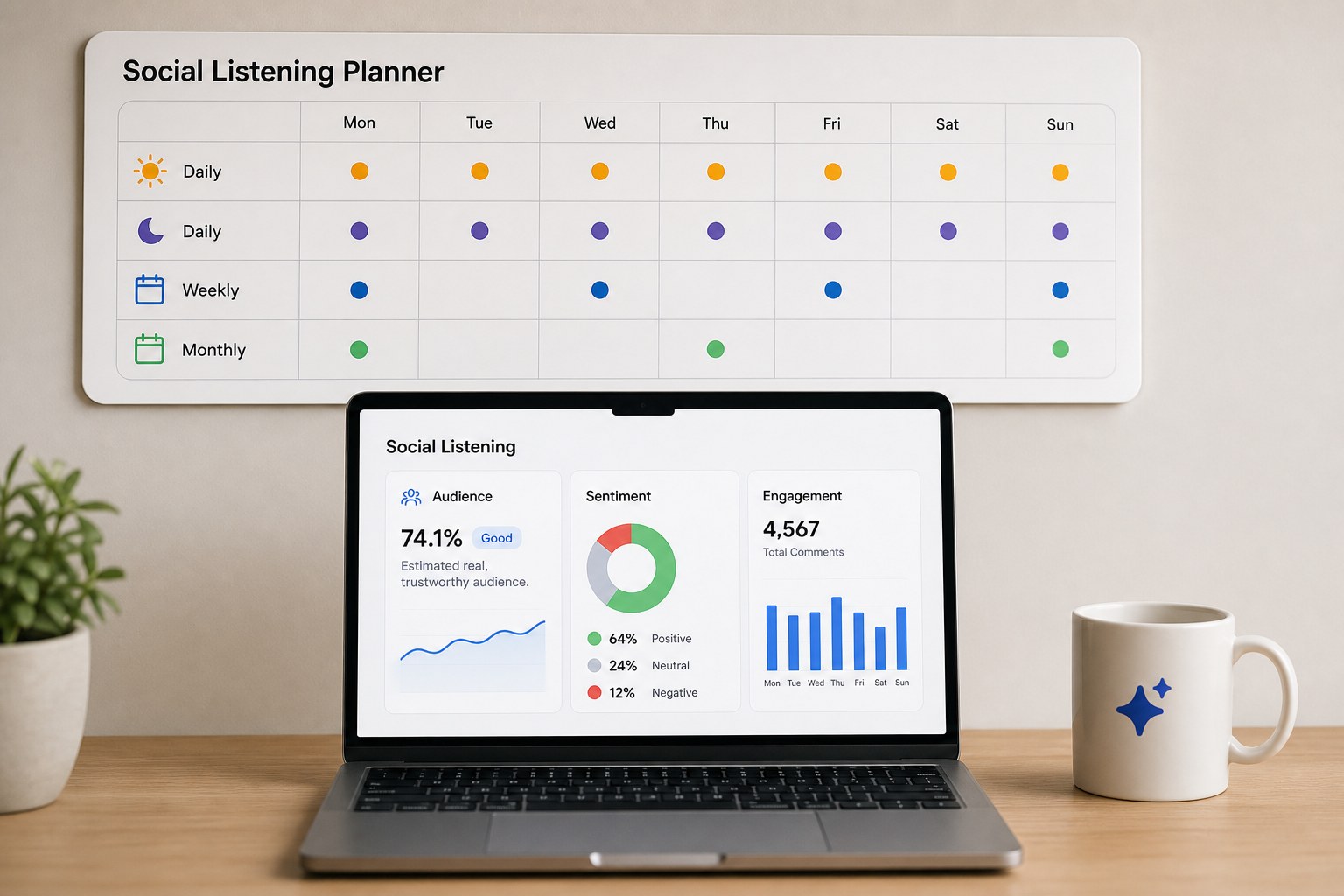
The brands that get steady value from social listening do not check it now and then. It runs in the background. Competitor activity is tracked continuously, campaign hashtags are watched while campaigns are live, and comments are classified as they arrive. When a brief is being written, the data is already there.
A workable rhythm: purchase-intent and service comments are handled daily. Live campaign sentiment is checked daily while the campaign runs. Competitor moves and share of conversation are reviewed monthly. Category trends get a weekly look.
CultureX’s Listening Suite covers the competitor and category layer, with sentiment that shows the tone, where a conversation started and what caused it, in Hindi, Hinglish and English. The Community Suite handles comment classification on your own channels, and the Tracking Suite connects hashtags and creator activity to campaign results. The uses above are not 15 tools. They are 15 decisions that get better when the listening is already running.
See CultureX in action
See what your category, your competitors and your customers said this week, in one view.
Frequently asked questions
What is social listening?
Social listening is monitoring and analysing social media conversations across your brand, your competitors, the wider category and audience comment sections. It includes sentiment, competitor content, creator partnerships and emerging trends, so the data turns into decisions rather than reports.
What is the difference between social listening and social media monitoring?
Monitoring tracks direct brand mentions, tags and comments. Listening looks wider: what people in the category are talking about, how competitors are showing up, and the sentiment building around a topic before it reaches you.
Can social listening pick up purchase intent?
Yes. A comment asking where to buy a product, whether COD is available or when it will be back in stock is a much stronger buying signal than a like. Comment classification sorts those into a purchase-intent group so someone can reply while the buyer is still interested.
Does social listening work for Hindi and Hinglish comments?
It has to, for any brand selling in India. CultureX reads Hindi, Hinglish and English within the same comment, so a regional concern is caught even when it never appears in English.
How often should a brand review social listening data?
It depends on the use. Purchase-intent and service comments daily, live campaign sentiment daily while the campaign runs, category trends weekly, competitor tracking and share of conversation monthly. The better setup is one where monitoring runs all the time and the team reads the output on that rhythm.