
The short version
- Reporting asks “how did we do?”. Research asks “what should we do next?” with the same data, pulled before the brief instead of after the campaign.
- 3 research questions are worth answering before any brief: what the category audience cares about now, which concerns are about to go mainstream, and where you stand against competitors.
- The operational change is timing. Pull the data at the start of the planning period, not at the end of the quarter.
A brief for a festive campaign gets written in July. The audience insight in it comes from a focus group run in January, a trend report from last quarter and the brand manager’s read on the category. All of it was true once. None of it says what buyers are asking this week.
Meanwhile the brand’s own channels, its competitors’ channels and 6 months of category comment sections already hold the answer. The data exists. It is just not in the room when the brief is written.
Social media market research is the habit of bringing that data in earlier. Instead of reviewing what happened after the campaign, you use the social data you already collect to get the brief right before the work begins.
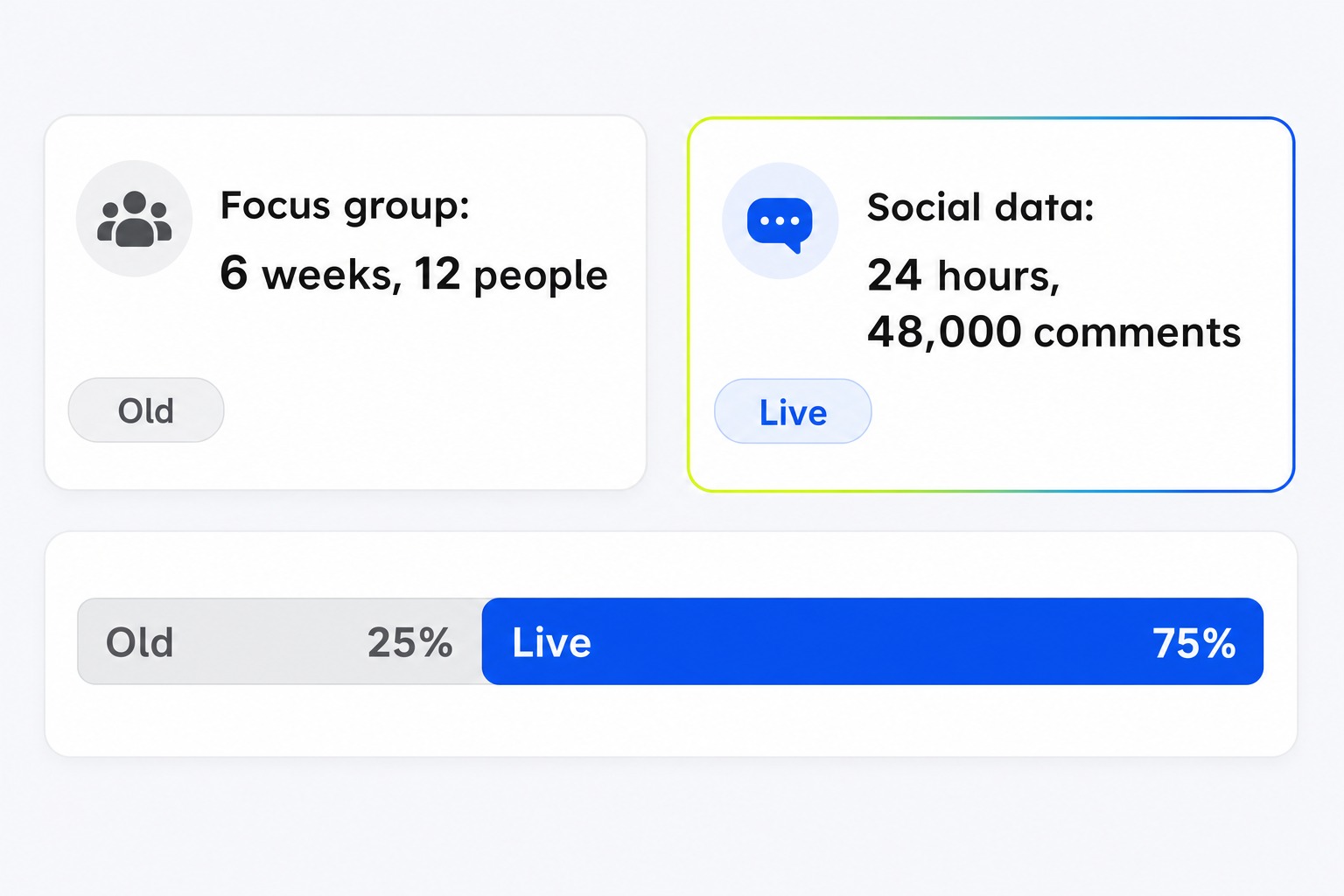
Reporting looks back. Research looks forward.
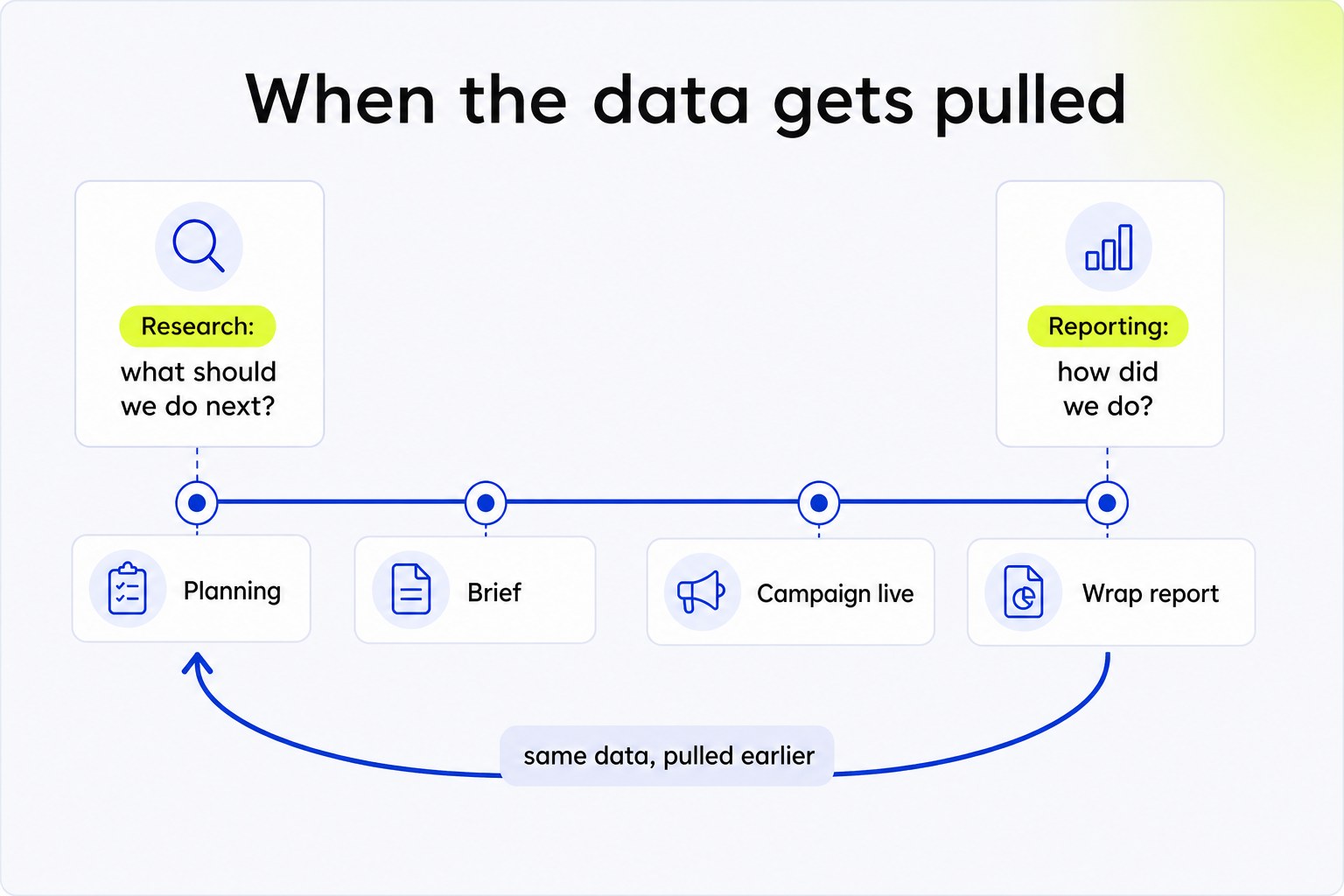
They use the same numbers, and most teams treat them as the same activity. They are not.
Reporting tells you what happened. Views, engagement rate, sentiment split, follower change. It answers “how did we do?” and it is always after the fact.
Research asks the same data a different question: what should the brand do next? It combines your own channel data, competitor activity and category conversation to shape the strategy before the brief exists. The difference is not a new data source. It is when you pull the data and what you ask it. Everything below rests on that one shift.
Research question 1: what does the category audience care about right now?
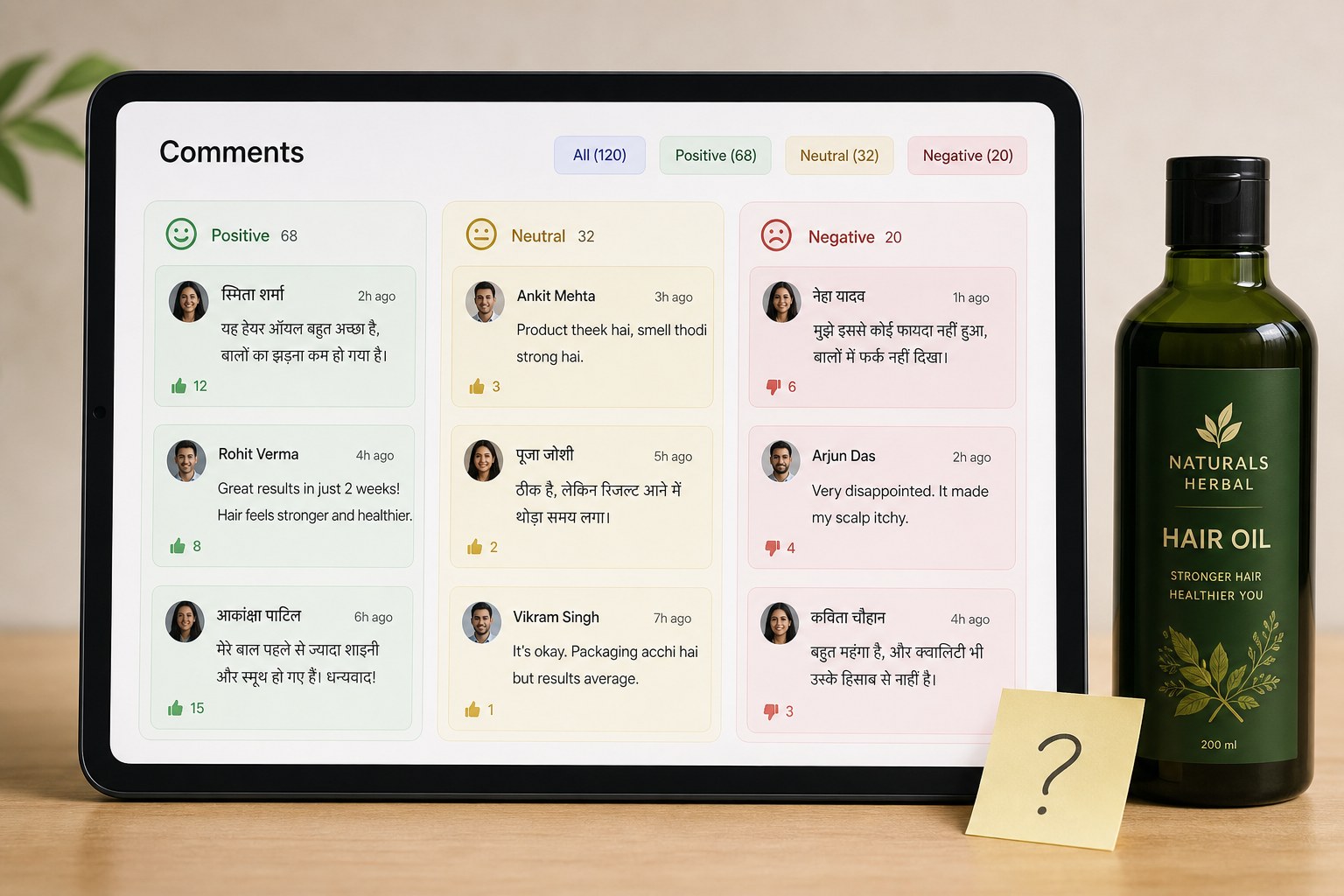
Most briefs run on audience insight that is months old. Category sentiment can move in weeks. A concern about ingredient transparency that started surfacing across skincare comment sections last month is in no Q1 report.
The live conversation sits in the comment sections of category-relevant posts: yours, your competitors’ and the creators your buyers follow. What people are saying this week, and in India that means reading Hindi and Hinglish comments alongside English ones. A comments radar across competitor and category posts, with sentiment split into positive, neutral and negative, does the reading. Whatever lands in the negative and questioning groups is usually the earliest sign of a concern.
The decision it changes: the brief is built around what buyers think now, not last quarter. If a concern is growing that the brief does not address, you add it before the creative team ever sees it. A hair-care brand that sees “will this work in hard water?” repeating under rival posts from Chennai puts the answer in every creator’s script.
Research question 2: which concerns are about to go mainstream?
New audience concerns show up in comments before anywhere else. Before the creator addresses it, before the press covers it, long before it appears in a branded research deck.
The pattern is the same across categories. A skincare ingredient keeps coming up. Buyers start asking the same delivery questions across food brands during a supply crunch. Tech reviews keep comparing one feature and hinting at where a rival falls short. These signals are visible early, but only to brands watching competitor and category conversations, not only their own posts.
Reading every comment is not practical at scale, which is where deep analysis helps: ask a plain-language question such as “what are the most common concerns in competitor comment sections this month?” and get a structured answer from the data instead of a weekend of scrolling.
The decision it changes: catch a concern early and you address it in messaging, product feedback or your reply strategy. Catch it late and you are responding to a conversation that has already shaped what people believe.
Research question 3: what are competitors betting on, and where do you stand?

A brand that watches only its own channels can measure absolute improvement. It cannot measure position. A 15% lift in engagement rate looks good on its own. It looks different if 2 key competitors lifted by 35% in the same period.
2 things are worth knowing before every brief. First, which content formats and topics competitors are increasing, and how their audiences are responding, because a competitor putting more weight on tutorials is telling you what its data says. Second, where you sit against them on followers, engagement rate, Social Score and audience make-up, tracked over the same window with the same method, so you see direction and not only a snapshot.
Both have their own guides on this blog. The method for tracking competitor content and creators is in social media competitor analysis for influencer campaigns. Measuring your slice of the category conversation is in share of voice in influencer marketing.
The decision it changes: a brand that knows it is losing ground to 2 named competitors on engagement quality writes the next brief with a measurable objective, recover position on those metrics, and has the benchmark to check it against afterwards.
How to turn the research into the brief
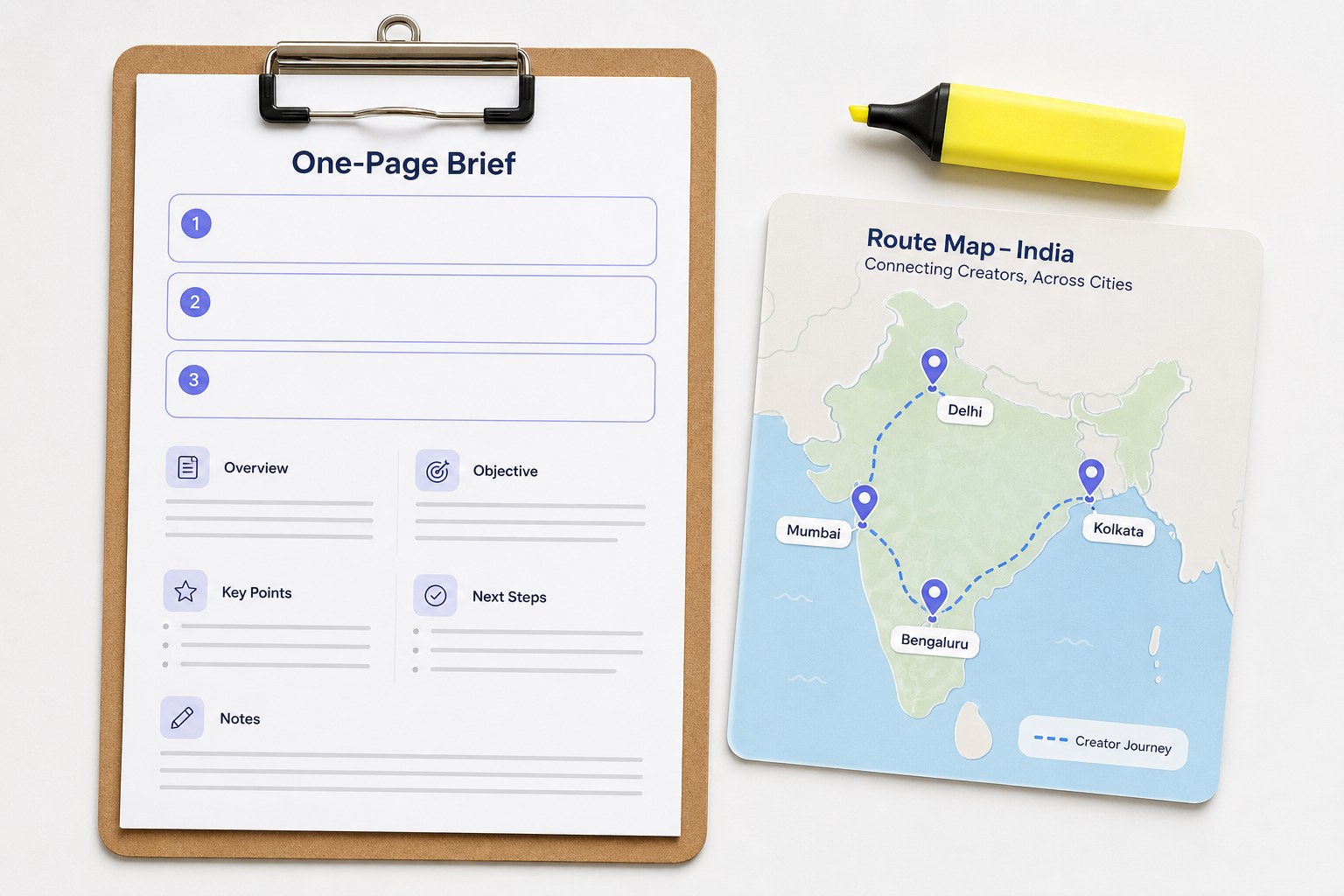
The 3 questions above need one operational change, not a new data source. Today, social data gets pulled at the end of a reporting period to show what happened. Research pulls the same data at the start of a planning period to decide what happens next.
Before the next brief goes to the creative team, answer these 3 in writing:
- What is the category audience most concerned about right now? Comments across competitor and category posts over the last 30 days, negative and questioning sentiment first.
- What are competitors investing in, and how is it landing? Posting frequency by theme, plus each competitor’s top-performing posts.
- Where do we sit against our top 2 competitors? Engagement quality and sentiment over the same window.
If those 3 have answers before the brief is written, the creative direction starts from where the audience is. The brief is sharper, and it shows in the work. Soch Apparels used regional audience data to choose creators city by city, across Delhi, Mumbai, Kolkata and Bengaluru, and lifted regional engagement by 45%.
On CultureX, the Listening Suite covers the competitor and category layer, and the Tracking Suite covers your own channels, so all 3 questions come from data the brand is already collecting. A brand that only pulls the numbers at quarter end is using its most current source of audience intelligence as a rear-view mirror. For 15 more places where this data changes a decision, see 15 ways to use social listening.
See CultureX in action
Ask your social data the 3 research questions before the next brief, on a live demo with your own category.
Frequently asked questions
What is social media market research?
Using social data to answer strategic questions before a campaign is built, rather than only measuring what happened after one runs. It draws on your own channel data, competitor content and category-level audience conversation to inform briefs, content strategy and positioning.
How is social media market research different from reporting?
Reporting is retrospective and answers “how did we do?”. Research is forward-facing and answers “what should we do next?”. Both use the same sources. The difference is when the data gets pulled and what question it is asked.
How do I spot emerging audience concerns using social data?
Watch the negative and question-led comments across your category, not only under your own posts. They surface new issues weeks before media coverage or formal research. Running that across competitor and creator posts continuously is what makes the signal arrive in time.
How do I benchmark my brand against competitors on social?
Track your own metrics and your competitors’ over the same window with the same method: followers, engagement rate, Social Score and audience make-up. Read the direction over time rather than a single snapshot, and pair it with share of voice to see whether your slice of the conversation is growing.